
Fabrics | nari18.com | unstitched suit fabric care | how to wash unstitched suit material | September 2026
How to Care for Unstitched Suit Fabric Before and After Stitching
By Nari18
Published 13 min read
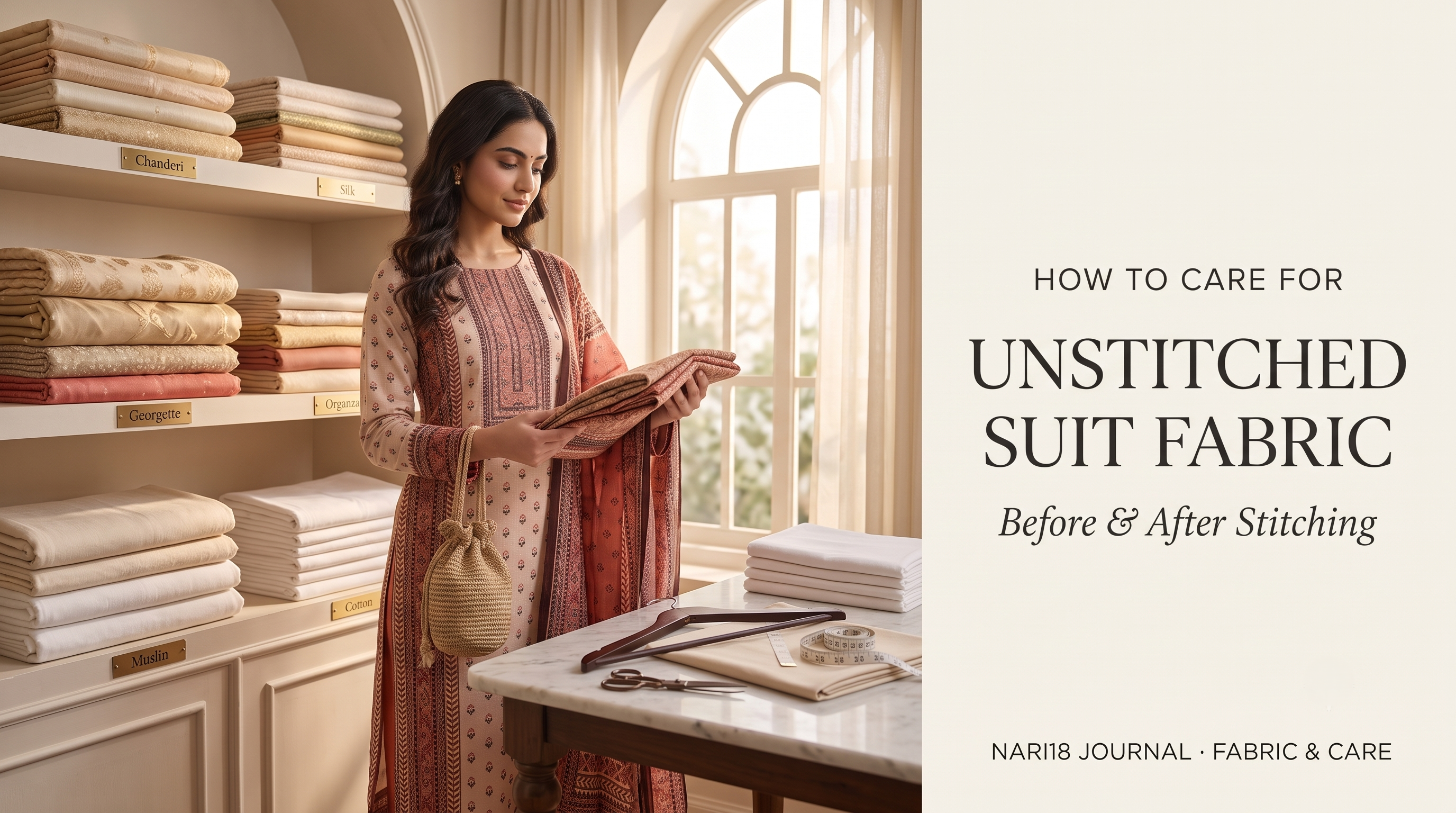
The fabric has arrived. The colour looks beautiful, the embroidery is exactly what you hoped for, and now there is one practical question: what should you do before it reaches the tailor?
Washing it immediately may feel sensible. So may pressing every fold or hanging the entire set together. Any of those choices can be right for one fabric and wrong for another. An unstitched suit may combine a kurta fabric, bottom fabric, dupatta, lining suggestion, embroidery, zari, print, or surface decoration. Each element can react differently to water, heat, friction, and storage.
The safest approach is simple. Identify the fabric and decoration first, check the care information supplied with the product, and ask before washing or cutting when anything is unclear.
The quick answer: Keep unstitched suit fabric clean, completely dry, and protected from direct light. Store it flat or loosely folded with clean tissue or muslin between delicate surfaces. Do not wash, steam, or press it aggressively before stitching. Confirm fibre content, colour stability, shrinkage guidance, embroidery, and lining needs with the seller or tailor first.
This matters because a category name alone does not tell the whole story. Two cotton fabrics can have different weaves, dyes, prints, and finishes. Silk may be pure, blended, woven with metallic yarn, or decorated by hand. Organza can be plain, embroidered, or combined with a heavier dupatta. Care must follow the exact piece, not a generic assumption about the name.
What to do when your unstitched suit arrives
1. Open it on a clean, dry surface
Wash and dry your hands, clear the table, and remove jewellery that could catch on threadwork. Avoid opening delicate fabric on a bed or floor where dust, skin products, or moisture may transfer to it.
2. Separate and identify every piece
Lay out the kurta material, bottom material, dupatta, and any extra border or lining. Do not assume that all pieces use the same fabric or require the same cleaning method. A set may pair an embroidered kurta panel with a simpler bottom and a sheer dupatta.
3. Read the product information again
Check fibre content, fabric name, work type, length, width, lining notes, and care instructions. Save a screenshot or printout with the order details. This gives you and your tailor a reference after tags and packaging have been removed.
4. Photograph the set before cutting
Take one full photograph and close views of the neckline panel, borders, embroidery placement, and any visible concern. The images help the tailor plan the cut and give you a record of the material before work begins.
5. Ask about uncertain details before doing anything irreversible
If you cannot confirm the fibre, dye, finish, or cleaning method, contact the seller. Nari18 customers can use the contact details on the website or visit the Gurugram boutique for guidance about a piece before custom stitching.
Should you wash unstitched suit fabric before stitching?
Sometimes a tailor may recommend controlled pre washing for a washable cotton or linen because the material may change dimension after its first wash. That decision should never be automatic.
Fabric behaviour depends on more than fibre. Dimensional change can be influenced by fibre, yarn, construction, processing, finishing, and care. A printed cotton, cotton silk blend, embroidered panel, and mul cotton dupatta may not respond in the same way.
Do not pre wash the set until you have answered these questions:
- Is every piece washable by the same method?
- Is there embroidery, zari, sequins, hand painting, block printing, or a special finish?
- Has the fabric already been processed to control shrinkage?
- Could one colour transfer to another piece?
- Does the tailor want the fabric washed before measurement and cutting?
- Are there care instructions from the seller that take priority?
If any answer is uncertain, pause. The cost of checking is far lower than the cost of colour transfer, puckered embroidery, lost sheen, or a changed fabric width.
Fabric by fabric care guide
The guidance below is a cautious starting point. Product instructions and advice for the exact fabric should always take priority.
| Fabric | Before stitching | Cleaning approach | Pressing and storage |
|---|---|---|---|
| Cotton | Ask the tailor if controlled pre washing is appropriate | Follow supplied instructions and test colour stability when advised | Use suitable moderate heat, protect prints, and store fully dry |
| Mul cotton and muslin | Avoid pulling or stacking under heavy fabric | Use gentle care only when product instructions allow it | Press carefully and support soft fabric with clean tissue |
| Linen | Discuss shrinkage and the desired finished drape with the tailor | Follow product instructions because blends and finishes vary | Avoid sharp long term creases and store clean and dry |
| Silk and silk blends | Do not wash merely because the set is unstitched | Seek product specific advice and use a trusted professional for delicate or decorated pieces | Use low suitable heat through a cloth and avoid direct pressure on decoration |
| Chanderi | Protect the sheer weave and any woven border | Follow the exact care note for the blend and work | Use a pressing cloth, pad folds, and avoid heavy stacking |
| Organza | Keep the crisp surface away from snagging jewellery and rough packaging | Ask before home washing, especially when embroidered | Use very cautious heat and avoid crushing the fabric in storage |
| Tissue | Protect metallic effect and surface texture | Use product specific or professional advice | Avoid direct heat on metallic areas and pad folds |
| Georgette | Keep embroidery and loose edges from catching | Follow the care instruction for the actual fibre blend | Use low suitable heat and store without stretching |
| Chiffon and crepe | Handle lightly and avoid pulling at edges | Follow the product care note because fibre blends differ | Test heat on a hidden edge and store away from rough surfaces |
| Embroidered or hand decorated fabric | Do not soak, rub, steam, or fold directly across raised work without advice | Consider professional care when the work is delicate, metallic, painted, or colour sensitive | Press from the reverse through a cloth and cushion decorated folds |
Cotton, mul cotton and muslin
These fabrics are often chosen for daily wear and warm weather, but softness does not mean every piece can enter a washing machine. Prints may release colour, fine muslin can distort under rough handling, and embroidery can change how a fabric should be cleaned.
Before stitching, ask whether the main fabric and bottom should be treated in the same way. Keep light fabric folded loosely and do not place a stack of silk or embellished suits on top of it. If the set includes a hand painted or hand printed piece, obtain specific advice before water touches it.
Readers comparing warm weather fabrics can also read the Nari18 guide to summer ethnic suit fabrics.
Linen
Linen can develop a relaxed surface with wear, but finishing treatments and blends affect how it behaves. Decide with the tailor whether you want a crisp or softer finished look. Do not assume that strong heat is the best way to remove every fold. A clean pressing cloth and a careful test on an unseen edge are safer than pressing the centre panel first.
Silk and silk blends
Silk deserves exact care information. A Banarasi inspired weave, a silk blend with embroidery, and a plain silk panel are not interchangeable. Water, friction, direct heat, and pressure can affect lustre or decoration.
Keep the material away from sunlight while it waits for stitching. Place clean tissue or muslin between surfaces that could rub. For a delicate or decorated piece, ask a trusted professional cleaner to assess the whole set rather than treating one component in isolation.
Browse silk unstitched suits → nari18.com/collections/silk-unstitched-suits
Chanderi
Chanderi is valued for a light, refined appearance, so both the weave and any border need support. Do not create a sharp fold through a zari border or raised motif. If folding is unavoidable, cushion the fold with clean tissue or muslin and change the fold position occasionally during long storage.
Explore the Chanderi collection → nari18.com/collections/chanderi-unstitched-suits
Organza and tissue
Organza is chosen for structure. Tissue is chosen for light catching surface effect. Crushing, heavy stacking, and direct high heat can change the character that made you choose the fabric in the first place.
Keep each piece supported while it waits for tailoring. Tell the tailor where the fabric must remain crisp and where movement is needed. Ask about lining before cutting, since lining affects opacity, comfort, seam finish, and the final drape.
Organza suits → nari18.com/collections/organza-unstitched-suits · Tissue suits → nari18.com/collections/tissue-unstitched-suits
Georgette, chiffon and crepe
These names can describe fabrics made with different fibres and finishes. Their movement makes them popular for festive silhouettes, but soft drape can also make edges and embroidered areas easier to pull out of shape during rough handling.
Avoid hanging long, uncut lengths from one point. Support the whole piece, keep it away from hooks and jewellery, and test any heat at an unseen edge. If the fabric carries Chikankari or other embroidery, protect the raised work and follow the more cautious instruction.
The Nari18 guide to Chikankari embroidery explains common stitch terms. Current options can be viewed in the georgette collection.
Embroidered, Chikankari and hand decorated pieces
Decoration changes the care decision. Thread, beads, sequins, metallic yarn, paint, dye, adhesive, and the base fabric can all respond differently.
Inspect the reverse as well as the front. Do not pull a loose thread. Do not place an iron directly on raised work. Do not scrub a mark in the hope that it will disappear. Ask for product specific advice, especially when the decoration is handmade or the set combines several colours.
How to handle a stain before or after stitching
Act calmly and identify the substance if possible. Use a clean white absorbent cloth to blot moisture without spreading it. Do not rub delicate embroidery or apply bleach, stain remover, perfume, or household solvent without confirming that it is safe for the fibre, dye, and decoration.
A cleaner will need to know what caused the stain, when it happened, and what has already been applied. Hiding an unsuccessful home treatment makes the next step harder.
If a stain appears before the fabric is cut, tell the tailor. Placement may affect the cutting plan, and cleaning could change the material before measurements are finalised.
How to iron unstitched suit fabric safely
Begin with the care instruction, not the highest temperature your iron can reach.
- Test an unseen edge first.
- Use a clean white cotton pressing cloth between the iron and the fabric.
- Work from the reverse where practical.
- Keep direct pressure away from embroidery, zari, sequins, beads, paint, and raised texture.
- Lift and place the iron instead of dragging it across delicate work.
- Stop if you notice a change in sheen, colour, texture, or smell.
Steaming is not automatically safer. Moisture and heat can affect finishes, dyes, metallic thread, and adhesives. Confirm before steaming a decorated piece.
How to store unstitched suit material
Long term storage should protect fabric from light, dust, moisture, pressure, pests, and repeated sharp folds.
Textile conservation guidance recommends flat support for most textiles and suggests padding folds when folding cannot be avoided. Museum guidance is designed for long term preservation, so a home wardrobe does not need to copy an archive. The principles are still useful.
- Store the set only when it is completely dry.
- Choose a clean, cool, dark, and dry shelf or drawer.
- Use a breathable clean cotton or muslin cover for routine wardrobe storage.
- Place clean tissue or prewashed cotton between delicate decorated surfaces.
- Pad sharp folds and change the fold position during extended storage.
- Keep heavy garments away from sheer or raised fabric.
- Inspect the set periodically for moisture, stains, insects, or colour transfer.
- Keep the product information and photographs with the set or in a digital folder.
Avoid leaving premium fabric in its delivery plastic for long storage. Packaging is useful during transport, but trapped moisture and pressure are not useful in a wardrobe.
Care after custom stitching
Once the suit is stitched, its weight and structure change. The finished garment now has seams, lining, interfacing, closures, and perhaps added decoration. Follow the care advice for the finished piece, not only the original fabric.
After wear, allow the garment to release body heat and moisture in a clean shaded space before storage. A light, well supported outfit may hang on a suitable hanger. A heavy or highly embellished outfit is often better folded with padded creases so the weight does not pull at the shoulders.
Keep the dupatta separate when its decoration could catch the kurta. Close hooks or cover them so they do not snag nearby fabric. Clean visible marks before long storage because stains can become harder to address with time.
If you are buying an unstitched set and want help planning the silhouette, read the Nari18 guide to buying unstitched suits online. You can also contact Nari18 before cutting, washing, or requesting custom stitching.
Common care mistakes
Washing the entire set without checking each piece
The kurta, bottom, and dupatta may use different fibres, dyes, or decoration. One method may not suit all three.
Pressing embroidery from the front
Direct pressure can flatten raised work or change surface shine. Reverse pressing through a clean cloth is a safer starting point when the care instruction allows ironing.
Leaving fabric in direct sunlight
Light can alter colour over time. Drying or airing should follow the product instruction and avoid unnecessary direct exposure.
Hanging heavy uncut fabric from one point
Concentrated weight can distort a soft weave or pull embroidery. Support the full length instead.
Storing fabric before it is fully dry
Even slight dampness is a poor starting point for closed storage. Let every piece dry completely before folding.
Treating the fabric name as a complete care label
Cotton, silk, or organza is only the beginning. Blend, weave, dye, finish, print, and decoration decide the safest method.
Frequently asked questions
Should I wash unstitched suit fabric before stitching?
Only when the product instructions and your tailor support it. Some washable cotton or linen may be treated before cutting, but blends, prints, embroidery, zari, hand painting, and mixed fabric sets can require a different approach.
How should I store unstitched suit material before tailoring?
Keep it clean, dry, away from direct light, and loosely folded or flat. Place clean tissue or muslin between delicate surfaces and avoid stacking heavy garments on top.
Can silk or organza suit fabric be washed at home?
Do not assume so. Check the exact fibre, blend, dye, finish, and decoration. Delicate or embellished silk and organza may need product specific advice or professional care.
How can I reduce the risk of shrinkage after stitching?
Confirm the fabric composition and care instruction before cutting. Ask the tailor whether controlled pre washing is suitable for that exact material. Do not apply a generic method to every cotton or linen set.
Is dry cleaning necessary for every ethnic suit?
No. The correct method depends on the exact fabric and work. Some everyday fabrics may be washable, while delicate, embellished, colour sensitive, or mixed fabric pieces may benefit from professional assessment.
Can I wash the kurta fabric, bottom, and dupatta together?
Only if the care information confirms that every piece is compatible. Different fibres and colours may react differently, even when sold as one set.
How should embroidered fabric be ironed?
Follow the care instruction, work from the reverse where practical, use a clean pressing cloth, and keep direct heat and pressure away from raised work.
What should I ask before custom stitching?
Confirm fabric composition, lining, desired silhouette, measurements, sleeve and neckline placement, embroidery position, seam allowance, and whether any approved fabric preparation is needed before cutting.
Protect the fabric before it becomes your favourite suit
The best care decision usually happens before the first wash and before the first cut. A few minutes spent checking fibre, decoration, and tailoring needs can protect the colour, texture, and drape you chose.
Nari18 offers unstitched suit sets across cotton, muslin, mul cotton, silk, Chanderi, organza, georgette, tissue, chiffon, and other fabric families. Browse the full Nari18 catalog, or contact the team if you need product specific guidance or want to discuss custom stitching.